
Gallery Wall Different Frames: Create a Cohesive Look
Key Takeaways
- Repeat two or three unifying elements like color, finish, mat, or spacing to tie different frame styles together;
- Use simple rules like a 60/30/10 color balance, consistent 2–3 inch gaps, and one eye-level anchor to create order;
- Plan with reliable layout formulas like soft grids, salon clusters, or staircase flows, then test and adjust with repositionable Mixtiles;
- Start with 6–9 pieces or scale to 12 plus, and use the Mixtiles app to preview, shop, and rearrange your wall art without damage.
Designing a gallery wall different frames can look curated, not chaotic, if you follow a few smart, easy rules. Whether you love mixing black frames, wood tones, and white mats, or pairing modern and vintage pieces, a clear color story and consistent spacing make everything click. This guide shows you how to choose frame styles, select art and prints, plan spacing, and get pro results. Our picture tiles are adhesive and repositionable, so you can try new layouts without nails or stress.
Ready to build your mixed-frame gallery wall? Explore our collection of gallery walls and other unique wall arts for inspiration, or visit our website to start designing your custom set in minutes.
What makes a gallery wall with different frames feel cohesive?
Cohesion comes from repetition and rhythm. Choose a simple palette, keep gaps consistent, and repeat one or two elements like mat color or frame finish. Place one larger anchor near eye level, then balance visual weight as you build around it.
How does the 60/30/10 rule simplify mixing?
Pick a primary frame tone for roughly 60 percent of the wall, a secondary for 30 percent, and an accent for 10 percent. For example, lead with black, support with natural wood, and accent with brass. If your art comes in many colors, echo that ratio with the prints you select for a cohesive look.
How many finishes can you mix successfully?
The sweet spot is two or three finishes. If you mix three, vary sheen and warmth so they do not clash. Think matte black with satin brass and warm oak. Keep mats consistent in white or off-white to calm the mix, even when frame styles differ.
Should your gallery wall frames match, or is mixing better?
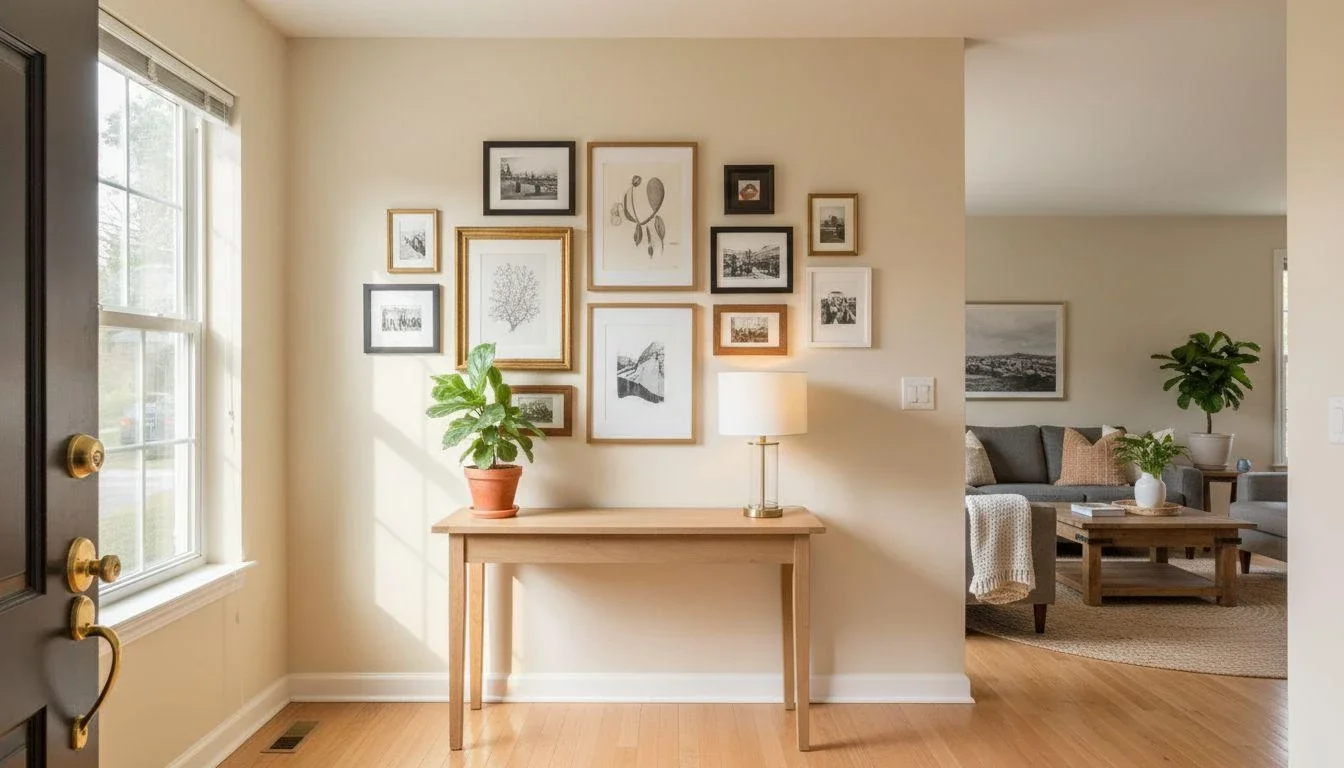
Both work. Matching frames create clean lines and suit modern grids in a hallway or dining room. They are the best choice when your prints range from family photos to an oil painting and you want a unified frame style. Mixed frames bring character and a collected feel, great for a living room or staircase where you want warmth and personality with framed pictures you have collected.
All matching frames shine in tight grids and contemporary spaces that favor symmetry. Mixed frames shine in salon-style photo gallery walls and cozy rooms where you want to mix vintage art, modern photography, and small objects. If you are unsure, start with mostly black or wood frames and add one metallic accent to test the look.
How do you pick frame colors and materials that play well together?
Use your room for cues. Echo existing metals, furniture legs, or wood floors. Black frames work with almost every style and make color pop. White frames look airy and modern. Medium wood frames add warmth, especially near linen sofas or oak consoles. When you mix, keep mats consistent to bridge different frames, and repeat colors at least twice so nothing feels like a one-off.
These palettes are easy to replicate if you want a cohesive gallery without guesswork.
- Matte Black, Warm Oak, Off-White Mats;
- White, Natural Maple, Polished Brass Accents;
- Walnut, Soft Black, Antique Gold Accent.
Want a stress-free way to try palettes and spacing? Our repositionable photo tiles let you pick finishes and move pieces until everything feels balanced. See how easy it is to create your perfect wall.
How do you plan the layout for mixed frames without guesswork?
Define the footprint, place one anchor near the center at eye level, and keep 2–3 inch gaps between pieces. Build outward with medium pieces, then fill gaps with small frames. Align the overall group with furniture so the arrangement feels connected to the room.
What are fail-safe gallery wall formulas you can copy?

The Salon Cluster: Start with one large anchor, add three to four medium frames around it, then tuck in small pieces to even out the silhouette. Keep gaps identical so the edges feel intentional.

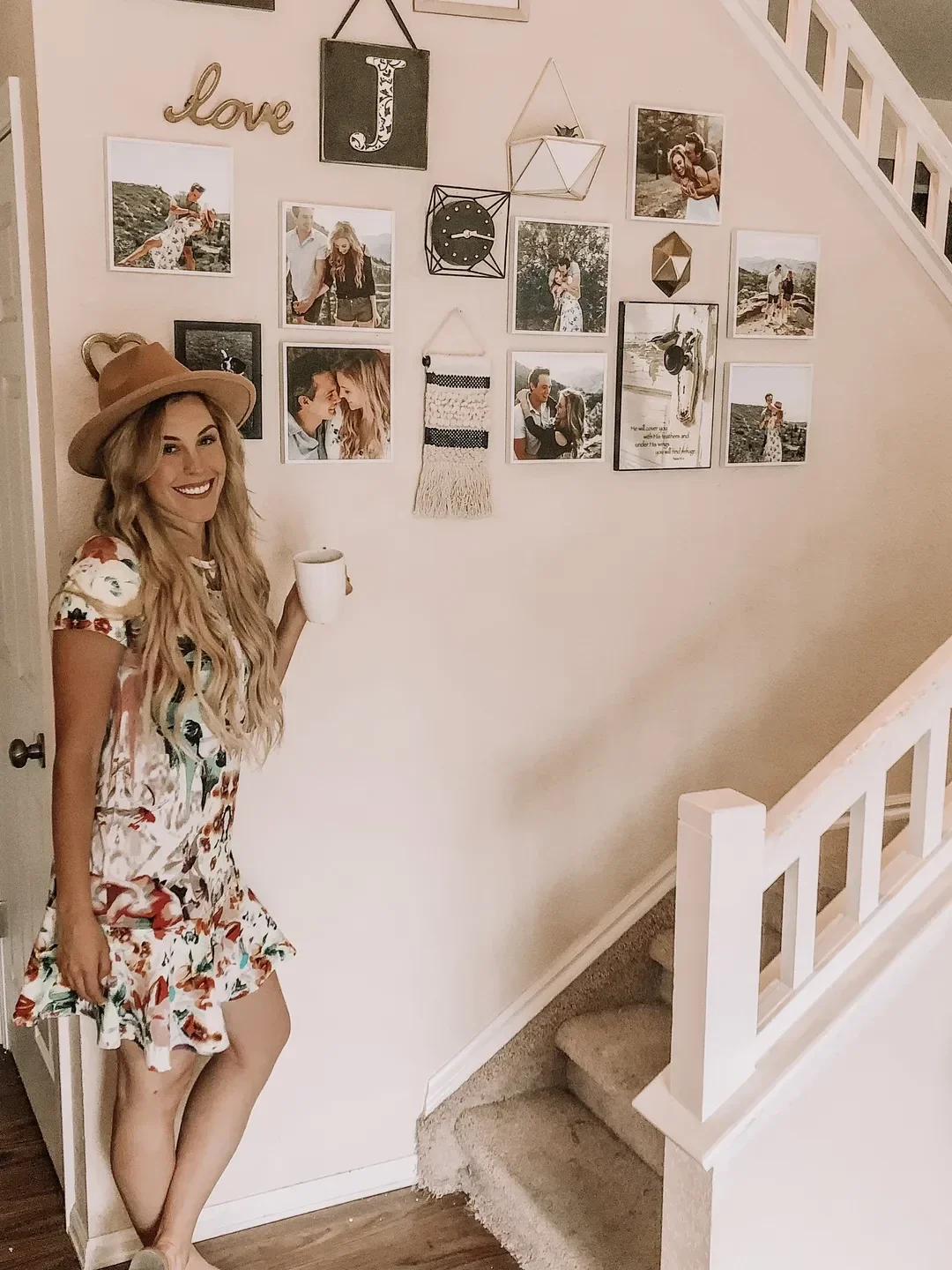
The Stair-Step: Follow the rise of your stairs and align centers along an imaginary diagonal line. Mix portrait and landscape to keep movement lively.

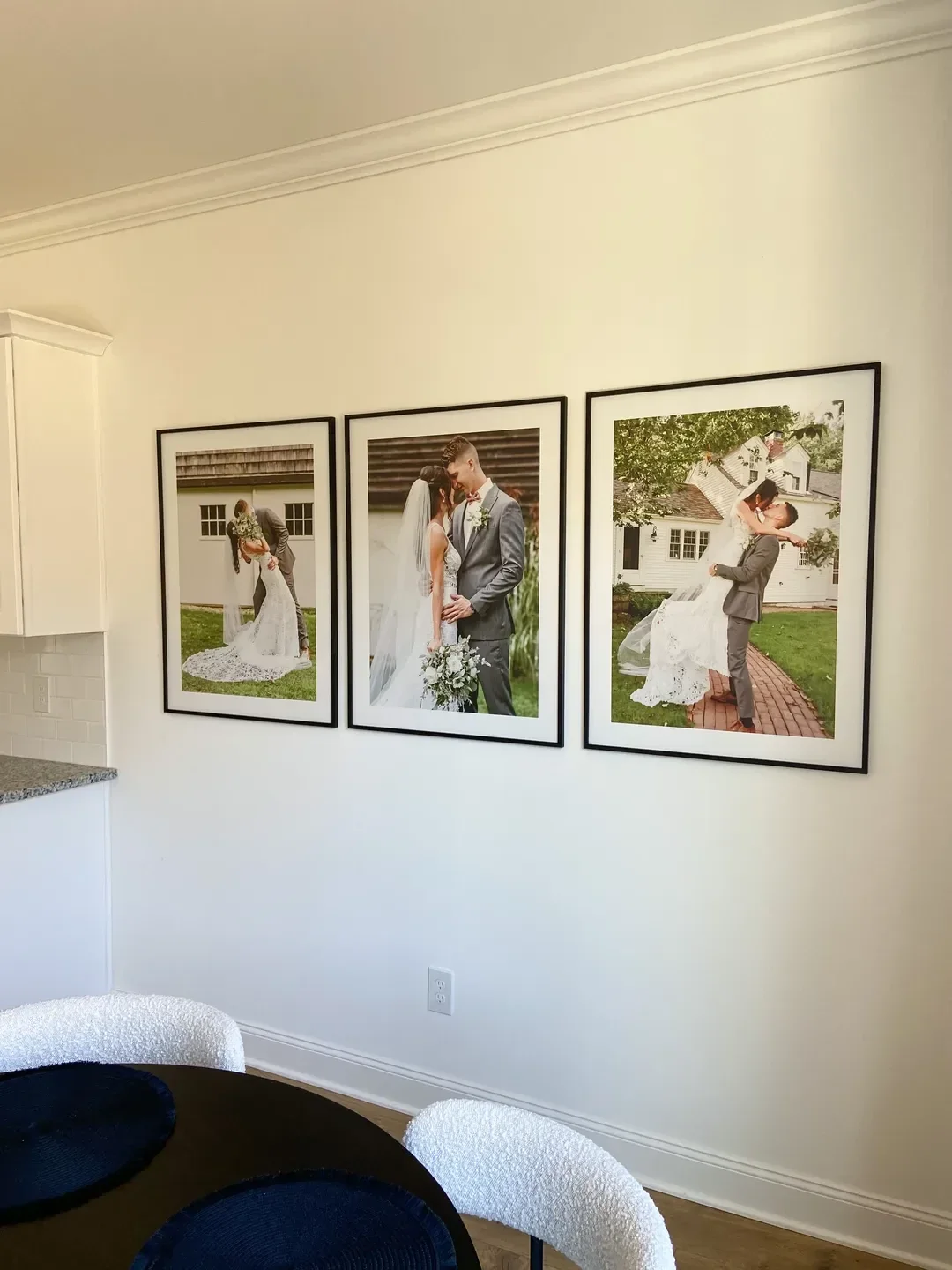
The Soft Grid: Create loose rows or columns with equal spacing. This gives you a modern look without rigid perfection. Great when you prefer a balanced gallery that still feels human.

The Line and Scatter: Establish a baseline with the bottom edges of two or three frames above a console, then float smaller pieces above to add energy.
Quick layout tips
Odd numbers feel dynamic, especially in small groupings. Mix portrait and landscape orientations for balance. Distribute darker or larger frames evenly so one side of the gallery does not feel heavy. When in doubt, step back and squint to judge balance across the wall.
Which art should you mix inside those different frames?
Blend subjects and styles so the gallery feels collected over time. Pair a vintage oil painting with modern abstracts and family photography. Mix black and white photos with color prints to create breathing room. Use large pieces to carry the wall and small pieces to bridge gaps. Aim for a mix of portrait and landscape so you can fit the composition together like a puzzle that looks intentional.
You will want one anchor piece at the largest size, three to four medium works in different styles, and several small fillers for tight spots. Include at least one black and white piece and one colorful print for contrast. Repeat a motif like a color, subject, or mat choice two or three times so the wall feels cohesive.
Can you mix frames with objects and other media?
Yes, and it can look fantastic. Try a small mirror, a textile, a plate, or a sculptural object next to framed art. Keep objects lighter than your major frames so they do not overpower the arrangement. Maintain the same 2–3 inch spacing halo around objects so everything reads as one gallery. Mixtiles tiles use a gentle adhesive, so you can place them near fragile pieces without worrying about nails.
What size and spacing rules create a polished result?
Use these quick references to decide placement in a living room, hallway, or bedroom. The right scale relative to furniture will make your gallery look designed, not improvised.
Not sure which sizes to combine? Use our canvas size chart to compare common dimensions and plan balanced groupings before you place anything on the wall.
|
Placement |
Imperial |
Metric |
Notes |
|---|---|---|---|
|
Center height, general |
~57 in to center |
~145 cm |
Common museum guideline for eye level. |
|
Spacing between pieces |
2–3 in |
5–8 cm |
Use tighter gaps for small frames, a touch wider for large. |
|
Above sofa back |
6–8 in |
15–20 cm |
Group width about two thirds of sofa width. |
|
Above console or headboard |
4–8 in |
10–20 cm |
Keep the overall composition centered on the furniture. |
|
Staircase centerline |
Parallel to stair rise |
Parallel to stair rise |
Align centers along the diagonal for a clean flow. |
How does Mixtiles make mixed-frame gallery walls easier?
Mixtiles tiles are lightweight, adhesive, and repositionable, so you can try layouts, adjust spacing, and mix sizes without tools. Gallery wall kits give you balanced templates, and the app preview helps you see what will work on your walls before you buy.
Step 1: Pick your palette
Choose two or three frame finishes and a mat look you love. Black, wood, and one metallic accent will cover most styles from modern to eclectic.
Step 2: Select your photos or art
Upload favorite pictures, mix color and black and white, and add a few prints from our fine art collection. You can also include canvas prints for texture.
Step 3: Choose your layout
In the app, try a salon cluster, a soft grid, or a staircase layout. Use Gallery Wall Kits when you want a ready-made arrangement that you can still customize.
Step 4: Place your anchor
Start at eye level, then add medium pieces around it. Keep 2–3 inch gaps so the gallery reads as one design.
Step 5: Reposition until it is perfect
Move tiles to distribute visual weight, tweak spacing, and straighten lines. The adhesive is gentle on painted walls, so you can iterate freely until everything comes together.
A gallery wall with different frames looks cohesive when you repeat a few unifying elements, keep spacing consistent, and plan around one anchor piece. Mix sizes, orientations, and styles to create a collected look that feels unique to your home. With Mixtiles adhesive, repositionable frames and Gallery Wall Kits, you can test, tweak, and perfect your wall art without nails or stress.
Design your mixed-frame gallery today. Turn your favorite photos to canvas or download the Mixtiles app to build a beautiful, damage-free gallery wall in minutes.
Frequently Asked Questions
Can you mix different frame styles in one gallery wall?
Yes. Choose two or three finishes, repeat them across the wall, and keep mats consistent to create cohesion. Balance visual weight by spreading darker or thicker frames evenly. Use one larger anchor at eye level, then build around it.
How do you arrange different sized frames?
Start by placing your largest or most important piece near eye level, slightly off center. Add medium pieces around it, keeping 2 to 3 inch gaps. Fill remaining spaces with small frames. Step back often to check balance across the whole group.
What are the basic rules for a gallery wall layout?
Define the footprint relative to furniture, about two thirds the width of the sofa or console. Keep centers around 57 inches high. Maintain equal spacing, mix portrait and landscape, and repeat colors. If uncertain, test layouts with removable frames like Mixtiles.
Is it okay to use different frame colors on one wall?
Absolutely. Use a simple 60/30/10 palette to guide proportions. Let one color lead, a second support, and a small accent add character. Echo metals or wood tones from the room, and repeat each color at least twice.
How far apart should frames be in a gallery wall?
Aim for consistent gaps of 2 to 3 inches between pieces. Tighter spacing suits small frames, slightly wider spacing suits large ones. Keep the same halo around objects or mirrors too, so the arrangement reads as one cohesive gallery.

Be the first to know — deals, news & decor ideas.
By clicking you agree to the Terms of Use & Privacy Policy